6679 shaares
555 results
tagged
opendott
Berlin im Mai 2021 – Innovative Reparaturkonzepte, Tausch- und Verleihplattformen, E-Commerce, Vermittlungsbörsen für geteilte Güternutzung und anderes mehr – neue und vielfältige Praktiken zeigen, wie eine nächste Generation der Kreislaufwirtschaft aussehen kann. Gerade in Berlin ist in den letzten Jahren ein „Innovationsökosystem“ für neue Produktnutzungssysteme entstanden, so das Institut für Zukunftsstudien und Technologiebewertung (IZT) und das Ecologic Institut in einer Reihe neuer Studien. Im Projekt „Circular City Berlin“ analysieren die Forschungspartner innovative Ansätze der Kreislaufwirtschaft in Berlin mit Schwerpunkt auf Textilien, Bauen und Elektro- und Elektronikprodukte. Das Projekt ist Teil des Forschungsverbunds Ecornet Berlin und wird vom Regierenden Bürgermeister, Senatskanzlei – Wissenschaft und Forschung gefördert.


A consortium of NGOs, science and business formulated a DIN SPEC on a zero waste vision for companies. During the one-year development process of the DIN SPEC, Laura Grotenrath represented Circular Berlin as a delegate of the coordinating body for standardization work of environmental associations (Koordinierungsstelle für Normierungsarbeit der Umweltverbände/ KNU)

Fixperts is a learning programme that challenges young people to use their imagination and skills to create ingenious solutions to everyday problems for a real person. In the process they develop a host of valuable transferable skills from prototyping to collaboration.
Fixperts offers a range of teaching formats to suit schools and universities, from hour-long workshops, to a term-long project, relevant to any creative design, engineering and STEM/STEAM studies.
Fixperts offers a range of teaching formats to suit schools and universities, from hour-long workshops, to a term-long project, relevant to any creative design, engineering and STEM/STEAM studies.
FixCamp is a design and engineering activity camp for the problem-solvers of tomorrow.
For 15 days in 2018 the engineers, designers and thinkers of tomorrow tackled big issues and built big.
Kids and their parents went crazy for FixCamp. If your school, university or company is interested in what happens next then get in touch!
For 15 days in 2018 the engineers, designers and thinkers of tomorrow tackled big issues and built big.
Kids and their parents went crazy for FixCamp. If your school, university or company is interested in what happens next then get in touch!

Why the Buy Nothing Project? The Buy Nothing Project is brought to you by two friends who have worked hard to address the first of the three infamous “Rs,” Reducing, Reusing, and Recycling. Rebecca and Liesl want to address the “Reduce” part of the equation, as well as the lesser-known Rs, “Refuse” and “Rethink.”
/via Kamie Robinson
/via Kamie Robinson
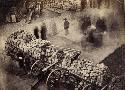
Salvage – a term that, in English, was originally associated with the payment received ‘for saving a ship from wreck or capture’ – only came to describe the act of saving itself in the late 19th century with the dawn of the salvage corps. As cities grew, and the risk of large-scale property loss became more central, insurance underwriters found it profitable to establish fire salvage services to reduce losses. A later meaning, evolving during WWI, refers to the ‘recycling of waste material’: put explicitly, the combing of battlefields by the British Army’s Salvage Corps (a ghoulish double entendre), which re-purposed the parts and property of fallen machines and soldiers for continuing use in the war effort.
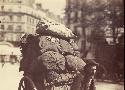
Ragpicker, or chiffonnier, is a term for someone who makes a living by rummaging through refuse in the streets to collect material for salvage. Scraps of cloth and paper could be turned into cardboard, broken glass could be melted down and reused, and even dead cats and dogs could be skinned to make clothes.
The ragpickers (rag and bone man) in 19th and early 20th Century did not recycle the materials themselves; they would simply collect whatever they could find and turn it over to a "master ragpicker" (usually a former ragpicker) who would, in turn, sell it—generally by weight—to wealthy investors with the means to convert the materials into something more profitable.[1][2]
Although it was solely a job for the lowest of the working classes, ragpicking was considered an honest occupation, more on the level of street sweeper than of a beggar. In Paris, for instance, ragpickers were regulated by law: their operations were restricted to certain times of night, and they were required to return any unusually valuable items to the owner or to the authorities.[1] When Eugène Poubelle introduced the garbage can in 1884, he was criticized in the French newspapers for meddling with the ragpickers' livelihoods.[3] Modern sanitation and recycling programs ultimately caused the profession to decline, though it did not disappear entirely; rag and bone men were still operating in the 1970s.
Ragpicking is still widespread in Third World countries today, such as in Mumbai, India, where it offers the poorest in society around the rubbish and recycling areas a chance to earn a hand-to-mouth supply of money. In 2015, the Environment Minister of India declared a national award to recognise the service rendered by ragpickers. The award, with a cash prize of Rs. 1.5 lakh, is for three best rag pickers and three associations involved in innovation of best practices.[4]
The ragpickers (rag and bone man) in 19th and early 20th Century did not recycle the materials themselves; they would simply collect whatever they could find and turn it over to a "master ragpicker" (usually a former ragpicker) who would, in turn, sell it—generally by weight—to wealthy investors with the means to convert the materials into something more profitable.[1][2]
Although it was solely a job for the lowest of the working classes, ragpicking was considered an honest occupation, more on the level of street sweeper than of a beggar. In Paris, for instance, ragpickers were regulated by law: their operations were restricted to certain times of night, and they were required to return any unusually valuable items to the owner or to the authorities.[1] When Eugène Poubelle introduced the garbage can in 1884, he was criticized in the French newspapers for meddling with the ragpickers' livelihoods.[3] Modern sanitation and recycling programs ultimately caused the profession to decline, though it did not disappear entirely; rag and bone men were still operating in the 1970s.
Ragpicking is still widespread in Third World countries today, such as in Mumbai, India, where it offers the poorest in society around the rubbish and recycling areas a chance to earn a hand-to-mouth supply of money. In 2015, the Environment Minister of India declared a national award to recognise the service rendered by ragpickers. The award, with a cash prize of Rs. 1.5 lakh, is for three best rag pickers and three associations involved in innovation of best practices.[4]
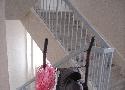
The practice of Karang guni is common in Singapore. Its practitioners are a modern form of rag and bone men that visit residences door-to-door.[1] They can either walk along corridors (if that particular HDB estate has a covered carpark) or for certain HDB estates where the carpark is right under the HDB blocks, walk through the carpark downstairs honking a horn. However, around landed properties, they may drive around in a lorry with a horn attached to it, instead of going door-to-door. They make visits in carts, collecting old newspapers and other unwanted items. These will be resold at specialized markets and eventually recycled or reused. "Karang guni" is a Malay phrase for gunny sack, which was used in the past to hold the newspapers. The Karang guni men would haul the heavy sacks on their backs as they walked their rounds to do the collection. Today, most of them use a hand truck instead.
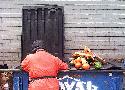
Dumpster diving (also totting,[1] skipping,[2] skip diving or skip salvage,[3][4]) is salvaging from large commercial, residential, industrial and construction containers for unused items discarded by their owners, but deemed useful to the picker. It is not confined to dumpsters and skips specifically, and may cover standard household waste containers, curb sides, landfills or small dumps.
Different terms are used to refer to different forms of this activity. For picking materials from the curbside trash collection, expressions such as curb shopping, trash picking or street scavenging are sometimes used.[5] When seeking primarily metal to be recycled, one is scrapping. When picking the leftover food from farming left in the fields one is gleaning.
People dumpster dive for items such as clothing, furniture, food, and similar items in good working condition.[6] Some people do this out of necessity due to poverty,[7] others for ideological reasons, while still others do so professionally and systematically for profit.[8]
Different terms are used to refer to different forms of this activity. For picking materials from the curbside trash collection, expressions such as curb shopping, trash picking or street scavenging are sometimes used.[5] When seeking primarily metal to be recycled, one is scrapping. When picking the leftover food from farming left in the fields one is gleaning.
People dumpster dive for items such as clothing, furniture, food, and similar items in good working condition.[6] Some people do this out of necessity due to poverty,[7] others for ideological reasons, while still others do so professionally and systematically for profit.[8]
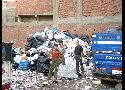
The Zabbaleen (Egyptian Arabic: زبالين Zabbalīn, IPA: [zæbbæˈliːn]) is a word which literally means "garbage people" in Egyptian Arabic.[2] The contemporary use of the word in Egyptian Arabic is to mean "garbage collectors". In cultural contexts, the word refers to teenagers and adults who have served as Cairo's informal garbage collectors since approximately the 1940s. The Zabbaleen (singular: زبال Zabbāl, [zæbˈbæːl]) are also known as Zarraba (singular: Zarrab), which means "pig-pen operators."[2] The word Zabbalīn came from the Egyptian Arabic word zebāla ([zeˈbæːlæ], زبالة) which means "garbage".
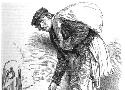
A rag-and-bone man or ragpicker[2] (UK English) or ragman,[3] old-clothesman,[4] junkman, or junk dealer[5] (US English), also called a bone-grubber, bone-picker, rag-gatherer, bag board, or totter,[6][7] collects unwanted household items and sells them to merchants. Traditionally this was a task performed on foot, with the scavenged materials (which included rags, bones and various metals) kept in a small bag slung over the shoulder. Some rag-and-bone men used a cart, sometimes pulled by a horse or pony.
In the 19th century, rag-and-bone men typically lived in extreme poverty, surviving on the proceeds of what they collected each day. Conditions improved following the Second World War, but the trade declined during the latter half of the 20th century. However, in more recent years, partly as the result of the soaring price of scrap metal, rag-and-bone-style collection continues, particularly in the developing world.
In the 19th century, rag-and-bone men typically lived in extreme poverty, surviving on the proceeds of what they collected each day. Conditions improved following the Second World War, but the trade declined during the latter half of the 20th century. However, in more recent years, partly as the result of the soaring price of scrap metal, rag-and-bone-style collection continues, particularly in the developing world.
How can our city be a home to
thriving people, in a thriving place,
whilst respecting the wellbeing of all people,
and the health of the whole planet?
When a city asks itself this very 21st century question, the result is a holistic snapshot of the city's performance across four crucial ‘lenses’ that arise from combining two domains (social and ecological) and two scales (local and global). Each of these interconnected lenses focuses on a part of the overarching question at the core of the City Portrait. Together, they combine local aspirations – to be thriving people in a thriving place – with global responsibility – both social and ecological – that requires every place to consider its many complex interconnections with the world in which it is embedded.
thriving people, in a thriving place,
whilst respecting the wellbeing of all people,
and the health of the whole planet?
When a city asks itself this very 21st century question, the result is a holistic snapshot of the city's performance across four crucial ‘lenses’ that arise from combining two domains (social and ecological) and two scales (local and global). Each of these interconnected lenses focuses on a part of the overarching question at the core of the City Portrait. Together, they combine local aspirations – to be thriving people in a thriving place – with global responsibility – both social and ecological – that requires every place to consider its many complex interconnections with the world in which it is embedded.
Urbantech Startup Playbook
Equally inspired by medieval bestiaries and observations of our damaged planet, A Bestiary of the Anthropocene is a compilation of hybrid creatures of our time. Designed as a field handbook, it aims at helping us observe, navigate, and orientate into the increasingly artificial fabric of the world.
Plastiglomerates, surveillance robot dogs, fordite, artificial grass, antenna trees, Sars-Covid-2, decapitated mountains, drone-fighting eagles, standardised bananas… each of these specimens are symptomatic of the rapidly transforming “post-natural” era we live in. Often without us even noticing them, these creatures exponentially spread and co-exist with us.
A Bestiary of the Anthropocene seeks to capture this precise moment when the biosphere and technosphere merge and mesh into one new hybrid body. What happens when technologies and their unintended consequences become so ubiquitous that it is difficult to define what is “natural” or not? What does it mean to live in a hybrid environment made of organic and synthetic matter? What new specimens are currently populating our planet at the beginning of the 21st century?
Plastiglomerates, surveillance robot dogs, fordite, artificial grass, antenna trees, Sars-Covid-2, decapitated mountains, drone-fighting eagles, standardised bananas… each of these specimens are symptomatic of the rapidly transforming “post-natural” era we live in. Often without us even noticing them, these creatures exponentially spread and co-exist with us.
A Bestiary of the Anthropocene seeks to capture this precise moment when the biosphere and technosphere merge and mesh into one new hybrid body. What happens when technologies and their unintended consequences become so ubiquitous that it is difficult to define what is “natural” or not? What does it mean to live in a hybrid environment made of organic and synthetic matter? What new specimens are currently populating our planet at the beginning of the 21st century?

Of all the mysteries and injustices of the McDonald’s ice cream machine, the one that Jeremy O’Sullivan insists you understand first is its secret passcode.
Press the cone icon on the screen of the Taylor C602 digital ice cream machine, he explains, then tap the buttons that show a snowflake and a milkshake to set the digits on the screen to 5, then 2, then 3, then 1. After that precise series of no fewer than 16 button presses, a menu magically unlocks. Only with this cheat code can you access the machine’s vital signs: everything from the viscosity setting for its milk and sugar ingredients to the temperature of the glycol flowing through its heating element to the meanings of its many sphinxlike error messages.
“No one at McDonald’s or Taylor will explain why there’s a secret, undisclosed menu," O’Sullivan wrote in one of the first, cryptic text messages I received from him earlier this year.
As O’Sullivan says, this menu isn’t documented in any owner’s manual for the Taylor digital ice cream machines that are standard equipment in more than 13,000 McDonald’s restaurants across the US and tens of thousands more worldwide. And this opaque user-unfriendliness is far from the only problem with the machines, which have gained a reputation for being absurdly fickle and fragile. Thanks to a multitude of questionable engineering decisions, they’re so often out of order in McDonald’s restaurants around the world that they’ve become a full-blown social media meme. (Take a moment now to search Twitter for “broken McDonald’s ice cream machine” and witness thousands of voices crying out in despair.)
Press the cone icon on the screen of the Taylor C602 digital ice cream machine, he explains, then tap the buttons that show a snowflake and a milkshake to set the digits on the screen to 5, then 2, then 3, then 1. After that precise series of no fewer than 16 button presses, a menu magically unlocks. Only with this cheat code can you access the machine’s vital signs: everything from the viscosity setting for its milk and sugar ingredients to the temperature of the glycol flowing through its heating element to the meanings of its many sphinxlike error messages.
“No one at McDonald’s or Taylor will explain why there’s a secret, undisclosed menu," O’Sullivan wrote in one of the first, cryptic text messages I received from him earlier this year.
As O’Sullivan says, this menu isn’t documented in any owner’s manual for the Taylor digital ice cream machines that are standard equipment in more than 13,000 McDonald’s restaurants across the US and tens of thousands more worldwide. And this opaque user-unfriendliness is far from the only problem with the machines, which have gained a reputation for being absurdly fickle and fragile. Thanks to a multitude of questionable engineering decisions, they’re so often out of order in McDonald’s restaurants around the world that they’ve become a full-blown social media meme. (Take a moment now to search Twitter for “broken McDonald’s ice cream machine” and witness thousands of voices crying out in despair.)

Finally how did Moscoso apply the metaphor of the actual city of Liverpool as a port with the human body? “Liverpool’s position as a port and hub of cross-cultural encounters, circulation, distribution and global transnational mobility – along with its difficult history of humans forcibly moved from Africa to the Americas and beyond – is central to the narrative of this edition. It is a bringing-together of the near and far with notions of movement and digestion; the stomach’s role within the body and the movement from inside to outside, on a global scale.”
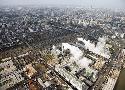
Makery: What was your first impression when you entered the bowels of this processing plant?
Stefan Shankland: The sheer scale of everything. The orders of magnitude here are monumental, gargantuan, in terms of both spaces and quantities. More than 700,000 tons of waste are processed each year, 100 tons are incinerated each day. This waste is ours—mine accumulated with 1.5 million other residents’ waste. It makes you acutely aware of how much garbage we produce collectively without realizing it. Through this visual, physical, spatial experience, we enter the imagination and the representation of what we produce as a society, or even as humanity.
In your video pieces, the workers are barely represented, or else they are played by dancers who seem to be imitating machines. Are the workers invisible in this world of scrap metal?
This is another aspect that struck me during my first visits. You enter an enormous site that processes waste from 1.5 million residents, but you don’t see anyone. You might see three people working in an office, and there’s a series of trucks that come in, but nobody gets out of them. They dump the waste in the pit, and then they leave. You don’t run into any humans, it’s something very mechanical.
Occasionally you do meet workers, mostly men. But they have a difficult relationship with their professional image. When it comes to the popular image of their profession, there is a kind of shame associated with garbage. The workers don’t voluntarily expose themselves as working in a waste processing plant. We always respected their right to privacy.
Stefan Shankland: The sheer scale of everything. The orders of magnitude here are monumental, gargantuan, in terms of both spaces and quantities. More than 700,000 tons of waste are processed each year, 100 tons are incinerated each day. This waste is ours—mine accumulated with 1.5 million other residents’ waste. It makes you acutely aware of how much garbage we produce collectively without realizing it. Through this visual, physical, spatial experience, we enter the imagination and the representation of what we produce as a society, or even as humanity.
In your video pieces, the workers are barely represented, or else they are played by dancers who seem to be imitating machines. Are the workers invisible in this world of scrap metal?
This is another aspect that struck me during my first visits. You enter an enormous site that processes waste from 1.5 million residents, but you don’t see anyone. You might see three people working in an office, and there’s a series of trucks that come in, but nobody gets out of them. They dump the waste in the pit, and then they leave. You don’t run into any humans, it’s something very mechanical.
Occasionally you do meet workers, mostly men. But they have a difficult relationship with their professional image. When it comes to the popular image of their profession, there is a kind of shame associated with garbage. The workers don’t voluntarily expose themselves as working in a waste processing plant. We always respected their right to privacy.
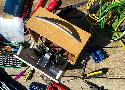
Mark Miodownik examines why electronic gadgets and household goods don’t last and are hard to repair and what’s being done to fix the problem.
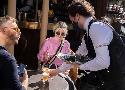
Dare to Repair! A new law could help. From the summer manufacturers must make spare parts and instructions available for a range of electronic appliances. It's a law that aims to cut down on waste by making goods last longer
A data standard for reporting data about Household Waste Recycling Centres
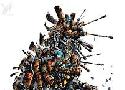
Salvagepunk
Other names
Junkpunk, Scavenged Punk, Scrappunk
Creator/s
Evan Calder Williams
Related aesthetics
Gadgetpunk
Post-Apocalyptic
Soft Apocalypse
Salvagepunk (also known as Junkpunk or Scavenged Punk) is a stylized setting that focuses on technology and culture based on an unusual source: scavenged junk. Weapons, tools, clothing, and sometimes entire cities will be built out of repurposed/recycled materials. A key factor here is that said materials, often pieces of trash, are being used for something other than their original purpose (as opposed to simply being repaired and reused).
Other names
Junkpunk, Scavenged Punk, Scrappunk
Creator/s
Evan Calder Williams
Related aesthetics
Gadgetpunk
Post-Apocalyptic
Soft Apocalypse
Salvagepunk (also known as Junkpunk or Scavenged Punk) is a stylized setting that focuses on technology and culture based on an unusual source: scavenged junk. Weapons, tools, clothing, and sometimes entire cities will be built out of repurposed/recycled materials. A key factor here is that said materials, often pieces of trash, are being used for something other than their original purpose (as opposed to simply being repaired and reused).
CRCLR is a Think- and Do Tank and stands for “circular”, as in the opposite of “linear” or “take, make, waste”. We believe that in order to address today’s grand challenges such as inequality and climate change, we need to change our current way of doing things. That’s why we develop spaces and concepts following circular principles, and can also support you in making your projects and processes more circular.
I felt a bit embarrassed putting this site together as it seemed a bit like vanity publishing. At times it was also an odd feeling, 'editing' my past. But then, I had all the images and it seemed a waste to let them rot, and I wanted to try doing a website. Practically, it will also be useful for anyone interested in commissioning work to look at my past stuff.
We wanted to create a game that would resonate with the experience of real people. The story mode of Common’hood is a story based on real world events, as factories fail and become abandoned, many citizens lose their jobs, get evicted and end up in the street. In a way we are talking of communities at the edge of homelessness. Debt is problem for many and we wanted to create a game that would give a sense of hope in terms of the empowerment obtained from making things with your own hands. The work of Ron Finley, has been particularly inspirational. Common’hood tries to engage real issues and share recipes for autonomous communities to become empowered and resilient. We hope to be able to develop a community around the game and grow the project organically for many years.

“Dr. Smartphone,” “Mobile City Center,” “Docteur IT,” “iklinik,” “La clinique du téléphone cellulaire,” “Phonetime,” “iPhone clinique,” “Smartphone clinique,” “Phone services...” These are some of the names of a new type of business that has appeared in towns and villages in the past ten years: smartphone repair stores represent the most visible element of this ecosystem, but similar practices can be seen in hackerspaces, Fab labs, and temporary venues such as repair cafés. The services provided vary, but they tend to focus on the material elements of the hardware. Though the problem or issue is usually with the device’s hardware, repair technicians may also be able to address software issues; overseeing updates, changing settings, installing applications, or adding software and accessories not supported by manufacturers.
Drawing on a two-year field study in Geneva, Lausanne and Zurich, this book focuses on these independent repair stores and hackerspaces, and the practices of their technicians. How do these individuals come to end up fixing customers’ devices? How do they learn to handle products that were not designed to be repaired? And what can the mending of a cracked phone display tell us about skill, innovation, and the use of technology?
Drawing on a two-year field study in Geneva, Lausanne and Zurich, this book focuses on these independent repair stores and hackerspaces, and the practices of their technicians. How do these individuals come to end up fixing customers’ devices? How do they learn to handle products that were not designed to be repaired? And what can the mending of a cracked phone display tell us about skill, innovation, and the use of technology?
The Haul Earth Ledger is an opensource fundraising platform aiming to facilitate the transition from a consumer society to a creative, inventive, expressive society. Drawing from similar efforts before it like the Whole Earth Catalog, the Ledger collects tutorials which look at consumer goods as raw materials for further experimentation.
In doing so, the team aims to question the power of the few remaining consumer brands out there clinging to power, while ensuring the lifecycle of these devices is extended to the best of our community's capacity. This, we hope can contribute acknowledging and alleviating the burden our lifestyles have been for our home, the Earth.
In doing so, the team aims to question the power of the few remaining consumer brands out there clinging to power, while ensuring the lifecycle of these devices is extended to the best of our community's capacity. This, we hope can contribute acknowledging and alleviating the burden our lifestyles have been for our home, the Earth.

Die Material Mafia ist ein soziales Unternehmen, dass Reststoffe aus der Industrie, von Messen, Ausstellungen und der Kreativbranche als wertvolle Ressource ansieht und diese der Wiederverwendung zugänglich machen möchte.

Teachable Machine is flexible – use files or capture examples live. It’s respectful of the way you work. You can even choose to use it entirely on-device, without any webcam or microphone data leaving your computer.

À travers cette publication, PiNG partage l’expérience accumulée pendant cinq années d’exploration collective : un mode d’emploi pour celles et ceux qui souhaitent développer des ateliers de réparation citoyen, une ressource pour qui s’intéresse à la question de l’obsolescence des objets électroniques et informatiques.
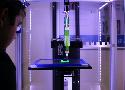
3D printing technology is increasingly being used to aid repair, especially in the creation of spare parts. We invited Bas Flipsen and Julieta Bolaños Arriola to talk about their work in the field and how 3D printing can help solve the e-waste crisis.

3D Printing Industry asked EOS, Spare Parts 3D, DiManEx, Ricoh 3D and Link3D for their thoughts on how 3D printed spare parts could help consumer appliance manufacturers adhere to the legislation, while avoiding large physical stocks of replacement parts and subsequent incurring costs.
Our mighty engineers breathe life into used devices. Purchasing refurbished electronics saves you money while doing right by the planet. Winners all around.
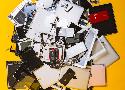
Sustainability is a global issue, but much of our current focus is on the ‘visible’: the plastic waste in our oceans and piles of landfill. But use of our earth’s resources and its impact on climate are equally significant; recycling only recovers a fraction of the resources consumed and can potentially create even more toxic waste.
One typical mobile phone, weighing around 160g, can require up to 35,000g of the earth to be mined, and result in around 85,000g of waste, before you have even opened the box. Add to that nearly 80% of electronics is not recycled properly and the problem is enormous.
Making products last longer, through repair, reuse and refurbishment has the potential to make a substantial positive impact.
This project takes a constructive or solutions approach to this global issue; to identify and shed a light on repairers, re-users and solution providers.
We used to value our 'things'. They were precious; created from scarce resources and hours of human endeavour. But a combination of consumerism and mass production has lead to 'things' of short life, of less perceived value and much harder to repair and keep working. To compound matters, our ability to repair has faltered, driven by the combination of lack of knowledge, lost skills, product design that inhibits repair and a legal framework that makes it difficult to set up self or independent repair.
The overall project explores ‘repair’ from multiple perspectives: this first part takes a cultural perspective where the practice has not (yet) been lost or forgotten. The second part explores from a European ecosystem and capabilities perspective, with municipalities and community groups educating and re-teaching the public about repair and building new communities. Working with community groups such as Repair Café and the Restart Project provides access to the network of repairers, an opportunity to share ideas and information, and to help promote each other’s work. The third explores the slow rejuvenation of independent repairers.
The overall aim is to shed a light on those providing solutions, so we can make better use of what we have and build more sustainable approaches.
One typical mobile phone, weighing around 160g, can require up to 35,000g of the earth to be mined, and result in around 85,000g of waste, before you have even opened the box. Add to that nearly 80% of electronics is not recycled properly and the problem is enormous.
Making products last longer, through repair, reuse and refurbishment has the potential to make a substantial positive impact.
This project takes a constructive or solutions approach to this global issue; to identify and shed a light on repairers, re-users and solution providers.
We used to value our 'things'. They were precious; created from scarce resources and hours of human endeavour. But a combination of consumerism and mass production has lead to 'things' of short life, of less perceived value and much harder to repair and keep working. To compound matters, our ability to repair has faltered, driven by the combination of lack of knowledge, lost skills, product design that inhibits repair and a legal framework that makes it difficult to set up self or independent repair.
The overall project explores ‘repair’ from multiple perspectives: this first part takes a cultural perspective where the practice has not (yet) been lost or forgotten. The second part explores from a European ecosystem and capabilities perspective, with municipalities and community groups educating and re-teaching the public about repair and building new communities. Working with community groups such as Repair Café and the Restart Project provides access to the network of repairers, an opportunity to share ideas and information, and to help promote each other’s work. The third explores the slow rejuvenation of independent repairers.
The overall aim is to shed a light on those providing solutions, so we can make better use of what we have and build more sustainable approaches.
Hemos preparado esta colección de vídeos, artículos de prensa y blogs en los que aparece el Repair Café Madrid por si eres periodista o estás documentando algo sobre los repair cafés.
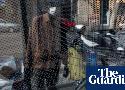
The chatarreros are Barcelona’s itinerant scrap-metal collectors, and there are thousands of them. Most are undocumented migrants and so there is no official census, but Federico Demaria, a social scientist at the University of Barcelona who is conducting a study of the informal recyclers in Catalonia, believes there are between 50,000 and 100,000 in the region. About half are from sub-Saharan Africa; the rest are from eastern Europe, elsewhere in Africa and Spain.
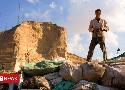
Behind the high walls on the outskirts of Cairo is a mostly Coptic Christian community, known as the Zabaleen - a derogatory term for garbage men.
Settling in an abandoned quarry, they became the informal waste disposal experts of the city in the 70s, collecting rubbish from the capital's streets for free and bringing it back to their homes to recycle it.
Sorting is done by hand - the plastics are separated from the cardboard, the clothes from the organic waste, before they're sold on to the next layer of the community's refuse economy.
Settling in an abandoned quarry, they became the informal waste disposal experts of the city in the 70s, collecting rubbish from the capital's streets for free and bringing it back to their homes to recycle it.
Sorting is done by hand - the plastics are separated from the cardboard, the clothes from the organic waste, before they're sold on to the next layer of the community's refuse economy.
Repair Acts is an international and multidisciplinary network of people working on topics relating to repair, care and maintenance cultures.
The data is clear– zero waste creates over 200x as many jobs as landfills and incinerators! Let’s stop throwing away the chance to create thousands of good jobs. It’s time for our leaders to invest in solutions that work for us and our planet.
Zero Waste City: Екскурсія містом без відходів
The European Data Portal harvests the metadata of Public Sector Information available on public data portals across European countries. Information regarding the provision of data and the benefits of re-using data is also included.
An open source Policy Toolkit for cities to develop digital policies that put citizens at the center and make Governments more open, transparent, and collaborative.

Sharing data can bring a range of benefits for individuals, organisations and society. It can help tailor products or services, make business processes more efficient, and improve a range of public services, from healthcare to transport and more. Achieving these aspirations requires governance structures that enable data access, while managing the rights and responsibilities associated with different data types. Different forms of such structures exist. They are differently suited to different purposes. The right data governance framework is dependent on who is participating, what their objectives are and what the nature of the data is.
Manifesto in favour of technological sovereignty and digital rights for cities
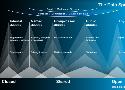
Some of us worry about personal health records being made open. Some confuse commercial and personal data, or mix up big data with open data.
To unpack data’s challenges and its benefits, we need to be precise about what these things mean. They should be clear and familiar to everyone, so we can all have informed conversations about how we use them, how they affect us and how we plan for the future.
To unpack data’s challenges and its benefits, we need to be precise about what these things mean. They should be clear and familiar to everyone, so we can all have informed conversations about how we use them, how they affect us and how we plan for the future.
This beginners guide has been developed to support municipalities and community stakeholders who are interested in zero waste. This guide provides an entry-level understanding on what zero waste is and how a zero waste strategy for your community can be designed and implemented. Specifically, this guide has been designed to:
Agility has become a common term when it comes to today's discourse on digitalization and government transformation. There is a widely held view that governmental bureaucracy with its laws, regulations, institutions, and `red tape' is unable to keep up with a rapidly changing and digitizing society. It is now often claimed that the solution is for governments to become agile. Along these lines, the resulting discourse on `agile government' posits that government is not agile now, but it could be, and if it were agile then government would be more e?ective, adaptive, and, thus, normatively better. We argue that while agility can represent a useful paradigm in some contexts, it is often applied inappropriately in the governmental context due to a lack of understanding about what `agile' is, and what it is not.
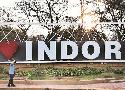
Many cities like Indore, Surat, Navi Mumbai, Ambikapur, Mysuru have been successfully implementing circular economy concepts and have showcased excellent models for effective waste management. In fact, Indore was declared the cleanest city in India for the fourth time in a row under the Swachh Survekshan 2020. Indore’s continuous success in the sector deserves accolades for consistent efforts and diligent planning for the entire waste value chain. The Indore model provides several examples that other cities can and should adopt.
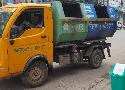
Since 2016, Indore’s municipal corporation (IMC) has eliminated garbage dumps, ensured 100% household-waste segregation and converted waste to usable products, such as compost and fuel. It partnered with non governmental organisations for an awareness campaign to change the behaviour of its citizens, contracted private companies to run some waste management operations, used technology, and improved municipal capacity to ensure the implementation of its waste management plan.
We have listed all 210 Resource Recovery Points of the Chennai Corporation. Buyers and Sellers registration is increasing every day.
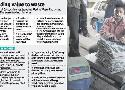
Chennai has become the first city to have an online waste exchange for municipal solid waste.
Residents who want to sell their waste online will be able to contact 2,600 scrap dealers and other agencies across the city.
The Madras Waste Exchange, which is both a web portal and an application, has been conceptualised by the Smart City Mission, with support from the Union Ministry of Housing and Urban Affairs. The web portal is www.madraswasteexchange.com and the Android app can be downloaded from Google Play.
Residents who want to sell their waste online will be able to contact 2,600 scrap dealers and other agencies across the city.
The Madras Waste Exchange, which is both a web portal and an application, has been conceptualised by the Smart City Mission, with support from the Union Ministry of Housing and Urban Affairs. The web portal is www.madraswasteexchange.com and the Android app can be downloaded from Google Play.
An Online Marketplace for Recyclable Waste
The GovLab and Nesta’s Centre for Collective Intelligence Design conducted three dozen interviews with public officials, platform creators and community managers to gather hard evidence of what does and does not work when using collective intelligence. We studied 30 examples from around the world in order to identify what is involved in using and institutionalising collective intelligence successfully. Drawing on this body of original research, we explain how to make collective intelligence an efficient mechanism for improving governance. Throughout the research report and case studies we illustrate how collective intelligence can be used to solve different kinds of problems, and can involve the use of different methods and tools. The cases span a wide range of topic areas from sustainability to transportation and include local, regional, national and international perspectives from six continents. The tools include everything from simple mobile applications for opinion gathering to more complex data analysis tools that use artificial intelligence. The methods range from completely digital consultations to in-person deliberations, and everything in between. Ten of the case studies cover projects that have attained institutionalisation, meaning that they have achieved longevity, survived a change in political administration or achieved success at scale.
In this time of great challenges, our democracies urgently need to produce citizens who can move from demanding change to making it. But the skills for doing so are not innate, they are learned.
This twelve-part program trains participants in the equitable innovation skills needed to become more effective and legitimate changemakers.
This twelve-part program trains participants in the equitable innovation skills needed to become more effective and legitimate changemakers.
Economy for the Common Good is a social movement advocating for an alternative economic model. It calls for working towards the common good and cooperation as values above profit-orientation and competition[1] which leads to greed and uncontrolled growth.[2] Christian Felber coined the term in his book Die Gemeinwohl-Ökonomie - Das Wirtschaftsmodell der Zukunft, published in 2010.[3] According to Felber, it makes much more sense for companies to create a so-called "common good balance sheet" than a financial balance sheet. The common good balance sheet shows the extent to which a company abides by values like human dignity, solidarity and economic sustainability.[4]
Turning Doughnut Economics from a radical idea into transformative action
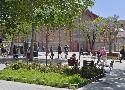
1. Waste prevention and preparation for reuse.
2. Simpler collection models and systems that are more integrated and adapted to the various urban and socio-economic environments.
3. Making the organic fraction the central focus of waste management.
4. Waste management and prevention in the business, commercial and service sectors.
5. A Green Point network offering more services adapted to all groups of residents.
6. Design, production and consumption criteria that are innovative and favourable to the circular economy.
7. Regulations and taxes that provide incentives for prevention, recovery and reuse, with the internalisation of collection and treatment costs.
8. Communication and education to foster the new culture of consumption, prevention and selective collection, in order to stimulate the general public's involvement.
9. Participation networks with social and civil society organisations that are in favour of waste prevention and reuse.
10. Municipal exemplariness regarding prevention, selective collection, reuse and recovery of resources.
2. Simpler collection models and systems that are more integrated and adapted to the various urban and socio-economic environments.
3. Making the organic fraction the central focus of waste management.
4. Waste management and prevention in the business, commercial and service sectors.
5. A Green Point network offering more services adapted to all groups of residents.
6. Design, production and consumption criteria that are innovative and favourable to the circular economy.
7. Regulations and taxes that provide incentives for prevention, recovery and reuse, with the internalisation of collection and treatment costs.
8. Communication and education to foster the new culture of consumption, prevention and selective collection, in order to stimulate the general public's involvement.
9. Participation networks with social and civil society organisations that are in favour of waste prevention and reuse.
10. Municipal exemplariness regarding prevention, selective collection, reuse and recovery of resources.
A significant part of the waste we generate can be given a new lease of life. In this area, it is worth noting the work done by the Barcelona Metropolitan Area's Environmental Body, with its "Better than new, 100% old" and "Repaired, better than new" campaigns.
In the city, there are various events where people can exchange items that they no longer use but which are in a good state of repair. Other people may be able to give these items a new lease of life. This is the case with the municipal programmes "Renew your wardrobe" and "Revamp your toys", which are part of the 2012-2020 Waste Prevention Plan. This establishes strategies that foster a more efficient, rational use of resources, the reuse and recycling of objects and the prevention of waste generation.
L'Ajuntament de Barcelona ha creat el Pla de Prevenció de Residus Municipals 2012-2020, per tal d'avançar i establir noves estratègies concretes que potenciïn un ús més eficient i racional dels recursos i un impuls a la prevenció de generació de residus, la reutilització i el reciclatge.
El Pla de Prevenció de Residus Municipals 2012-2020 té la missió de fomentar la reducció de deixalles a la ciutat involucrant tots els agents implicats (ciutadania, empreses, comerços, entitats, associacions i administracions).
El Pla de Prevenció de Residus Municipals 2012-2020 té la missió de fomentar la reducció de deixalles a la ciutat involucrant tots els agents implicats (ciutadania, empreses, comerços, entitats, associacions i administracions).
The Zero Waste Strategy adopted in 2016 aims to improve the quality of recycled products and, more specifically, of organic matter. This is to be done by reducing the amount of waste produced, reusing products and efficient recycling of waste. And all this in accordance with the motto of the Zero Waste Strategy: the best waste is the one that isn't created in the first place.
Digital Trust for Places and Routines is a project that seeks to advance an open-source communication standard for digital technology that enables agency for people in the real world. We believe that by first enabling transparency and understanding, we can increase accountability and human agency so that there can be trust in digital technology.
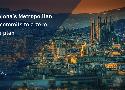
Spain’s second largest area just released its zero waste strategy plan with clear objectives for 2025.
The Zero Waste Cities approach is a continuous effort to phase out waste – not by burning or landfilling it – but instead by creating and implementing systems that do not generate waste in the first place
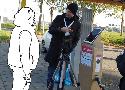
Firstly, scan cars – vehicles that are equipped with sensors to collect data on the urban environment – are becoming increasingly popular to help the municipality to carry out tasks efficiently. For example with parking policy enforcement, waste registration and advertisement taxation. Apart from making the city more efficient and clean, with this project we question and explore what public and democratic values should be embedded in the implementation of these scan cars.
Data: a promise for life in the city. Data enables us to tackle major problems of modern cities, making them cleaner, safer, healthier… but only as long as people stay in control of the data, and not the other way round. We – companies, government, communities and citizens – see this as a team effort and want to be a leading example for all other digital cities across the globe. To get started, we have come together to set out the following shared principles.

The Cities Coalition for Digital Rights, aims to promote, protect and uphold human rights on the internet at the local and global level.
With the support of the United Nations Human Settlements Program (UN-Habitat), we share best practices, learn from each other's challenges and successes, and coordinate common initiatives and actions. Inspired by the Internet Rights and Principles Coalition (IRPC) the work of 300 international stakeholders over the past ten years.
With the support of the United Nations Human Settlements Program (UN-Habitat), we share best practices, learn from each other's challenges and successes, and coordinate common initiatives and actions. Inspired by the Internet Rights and Principles Coalition (IRPC) the work of 300 international stakeholders over the past ten years.

Simple ideas, basic skills and everyday materials that help repair & transform your old objects.
Alle StW-design-Objekte werden von dem in London geborenen Künstler Stuart N.R. Wolfe als Einzelstücke entworfen und individuell in einer Berliner Werkstatt in Handarbeit gefertigt.
Das Haus der Materialisierung ist ein Zentrum für gebrauchte Materialien in Berlin. Bei verschiedenen Akteuren könnt ihr von Möbeln, über Holzwerkstoffe, Metallwerkstoffe, Textilien bis hin zu Farben und Schrauben alles finden. Kommt vorbei!
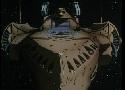
The ships are old junk heaps run on a shoestring by hard-bitten characters on the edge, seemingly held together with two pieces of string, chewing gum, and the will of God — the SF equivalent of the struggling Film Noir private eye, in other words.
Creating the Junkyard Planet. Adam Minter Talks Circular Economy and Christmas Tree Lights - YouTube
Adam Minter, author of Junkyard Planet, stopped by iFixit Headquarters to give an super interesting talk on rethinking e-waste, the circular economy and the fate of all your thrown away Christmas tree lights. Adam's an amazing author and an even better speaker so we hope you enjoy his talk as much as we did.

DRDs are ovoid, approximately 14 inches long, 10 inches wide and 8 inches tall, with two flexible black eyestalks with lights. They contain multiple tools and sensors to maintain and repair the Leviathan they inhabit, including a plasma welder which can double as a weapon.



Old parts, new parts or spare parts, you can shine no matter what you're made of!

An interactive educational toolkit for upper secondary high school educators and students to integrate circular thinking into the classroom.
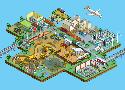
The lifecycle of your phone has big impacts on the planet.
Upcycling Deluxe ist der größte Onlineshop für Upcycling Design in Deutschland. Entdecke eine ganze Welt voller ungewöhnlicher wiederverwendeter Materialien, denen mit liebevoller Handarbeit in Entwicklungsländern zu neuem leben verholfen wird. Damit helfen wir nicht nur aktiv bei der Wiederverwertung von Müll, wo es keine Recycling-Möglichkeiten gibt, sondern wir stärken gleichzeitig auch lokale Wirtschaft um Armut zu bekämpfen.
Upcycling vs. Recycling
Unter Upcycling versteht man die kreative Wiederverwertung vermeintlich nicht mehr brauchbarer Materialien und Reststoffe in Form von neuen Designs. Die Ausgangsmaterialien werden – im Gegensatz zum Recycling – durch die neue, hochwertige Verarbeitung aufgewertet und sind daher neu hergestellten Produkten mindestens ebenbürtig. So werden ausrangierte Ölfässer zu einzigartigen Lampen und alte Zementsäcke zu Laptophüllen umfunktioniert.
Upcycling vs. Recycling
Unter Upcycling versteht man die kreative Wiederverwertung vermeintlich nicht mehr brauchbarer Materialien und Reststoffe in Form von neuen Designs. Die Ausgangsmaterialien werden – im Gegensatz zum Recycling – durch die neue, hochwertige Verarbeitung aufgewertet und sind daher neu hergestellten Produkten mindestens ebenbürtig. So werden ausrangierte Ölfässer zu einzigartigen Lampen und alte Zementsäcke zu Laptophüllen umfunktioniert.
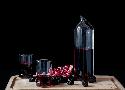
Don’t let the name fool you: WesternTrash is waste-neutral and 100% sustainable. The materials are upcycled or recyclable, the packaging is reusable, and bottles are sourced locally in Berlin. It’s about taking trash out of the system without putting any back.
Smart cities and their protagonists are strong, and their incentives are high; the cards are stacked in their favor, including the self-logic of technological development. Nevertheless, creative resistance is not futile, as there are strong tail-winds blowing with people and earth, of dignity and inclusion.
Explore Berlin-based organizations and projects working in the circular economy field! Click the bubbles to find out more, zoom in, search & filter by circular strategies.
Waste avoidance is simply avoiding the production of waste. It is often associated with the terms ‘waste reduction’ or ‘source reduction’, as well as ‘waste minimisation’. As stated in Background to Waste Management, minimisation is at the top of the waste hierarchy, and contrary to popular perception, reducing the amount of waste that is produced can be achieved relatively simply. Slight modifications of procedures and/or altering procurement practices can improve efficiencies in utilising resources, leading to a reduction in the amount of waste produced.
The Internet of Things (IoT) and ubiquitous computing are leading to an increase in objects with a short lifespan - either through breakage, “bricking” by the manufacturer, or discontinued use by the owner. This website documents a virtual workshop that took place as part of ACM DIS 2020, which explored how the configuration of values (e.g., functional, emotional, sentimental and environmental) designed into IoT objects influences the end-user practices of disposal, recycling and upcycling after these objects become defunct or obsolete. Through this lens, we considered potential design strategies that can be instilled during the process of design, to support the continuity of the material life of IoT objects after their “death”.

Historically, in Europe the commons was not a major affair. The lands that the lords and abbots set aside for the use of their serfs amounted to not much more than a sop to encourage their continuing subservience. In some areas it played a bigger role than in others, but all over Europe, the peasants were in constant upheaval trying to get out from under the thumb of the landlords. As towns emerged and guilds of skilled craftspeople developed in the early Middle Ages, prospects of more autonomy enticed peasants to the towns.
It may be stretching the historic record to say the guilds offered another world of possibility for the peasants. What we can say is that the growing opposition of workers to the rise of industrial capitalism in the 19th Century looked back several centuries and saw it that way.
It may be stretching the historic record to say the guilds offered another world of possibility for the peasants. What we can say is that the growing opposition of workers to the rise of industrial capitalism in the 19th Century looked back several centuries and saw it that way.
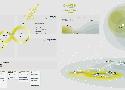
This thesis explores how public sector organizations introduce new ways of working, such as co-design methods and mindsets, and examines the interactions between emerging co-designing cultures and dominant public sector cultures. This research contributes to the field of design, with a focus on culture change in public sector organizations.
When designers try to create lasting change in the public sector, their aim is not only to co-design meaningful new or improved services, but also to embed the capacity – rather than dependency – of co-design into the organization. Current research suggests that this embedded co-design capacity allows for ongoing transformation.
When designers try to create lasting change in the public sector, their aim is not only to co-design meaningful new or improved services, but also to embed the capacity – rather than dependency – of co-design into the organization. Current research suggests that this embedded co-design capacity allows for ongoing transformation.

The »smart city« is a term widely used to signal an urban environment that re-invents, or »updates«, itself. The smart city not only embodies techno-visions and uses of urban space, but also signals the existence of different perspectives within itself.
In this presentation, we will seek to outline some of these with an outset in »the urban metainterface«. Examples of everyday urban experiences with interfaces are numerous: »TripAdvisor« provides access to restaurants, and other sights that are otherwise not clearly visible in the urban landscape; with »Airbnb«, any apartment in the city holds the invisible potential of a bed and breakfast, etc. In other words »every street corner and every local pub leads a double life« as expressed by Martijn de Waal. The interface is however not just an interface to the city, but is a meta-construction that within itself holds a particular urban gaze. The urban metainterface depends on an ability to capture the user’s behaviors: the more the interface opens up the city – to diverse behaviors and signification – the more it needs to monitor the users and their milieu, and process these data. The more we read, the more we are being read. But what are the aesthetic mechanisms of seeing and walking in the city, whilst being seen and being guided?
In this presentation, we will seek to outline some of these with an outset in »the urban metainterface«. Examples of everyday urban experiences with interfaces are numerous: »TripAdvisor« provides access to restaurants, and other sights that are otherwise not clearly visible in the urban landscape; with »Airbnb«, any apartment in the city holds the invisible potential of a bed and breakfast, etc. In other words »every street corner and every local pub leads a double life« as expressed by Martijn de Waal. The interface is however not just an interface to the city, but is a meta-construction that within itself holds a particular urban gaze. The urban metainterface depends on an ability to capture the user’s behaviors: the more the interface opens up the city – to diverse behaviors and signification – the more it needs to monitor the users and their milieu, and process these data. The more we read, the more we are being read. But what are the aesthetic mechanisms of seeing and walking in the city, whilst being seen and being guided?

The same principle need not be limited to food. “Repair cafés” could be places to meet and relax in every neighbourhood, and where you can also learn how to fix appliances and gadgets, mend clothes, or maintain bicycles. Community tool libraries could allow you to borrow a drill for some DIY or a projector for your next neighbourhood film screening. Seed libraries, where you can take out seeds in the spring and deposit new ones at the end of the season or swap compost for ready-to-use soil, could help people get involved in growing food.

He says that it is possible for old cities to be smart with the right interventions, “but when they want to have ‘smart’ they build a new city. What should happen to the city that we have now, should we abandon it? What we try to do is to help people in existing cities, so that in 5 or 10 years those people will build their own smart cities, using their own technology that they developed,” Agbodjinou says.
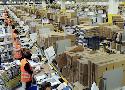
IN CAPITAL IS DEAD, McKenzie Wark asks: What if we’re not in capitalism anymore but something worse? The question is provocative, sacrilegious, unsettling as it forces anti-capitalists to confront an unacknowledged attachment to capitalism. Communism was supposed to come after capitalism and it’s not here, so doesn’t that mean we are still in capitalism?
This course looks at where important materials in products we use every day come from and how these materials can be used more efficiently, longer, and in closed loops. This is the aim of the Circular Economy, but it doesn’t happen on its own. It is the result of choices and strategies by suppliers, designers, businesses, policymakers and all of us as consumers.
In addition to providing many cases of managing materials for sustainability, the course also teaches skills and tools for analyzing circular business models and promotes development of your own ideas to become more involved in the transition to a Circular Economy.
You will learn from expert researchers and practitioners from around Europe as they explain core elements and challenges in the transition to a circular economy over the course of 5 modules:
In addition to providing many cases of managing materials for sustainability, the course also teaches skills and tools for analyzing circular business models and promotes development of your own ideas to become more involved in the transition to a Circular Economy.
You will learn from expert researchers and practitioners from around Europe as they explain core elements and challenges in the transition to a circular economy over the course of 5 modules:
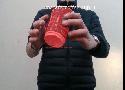
Recycleye has partnered with academics at leading universities to create WasteNet; the world’s largest dataset for waste, holding over 2.5 million training images created by deep learning and computer vision.
These datasets are refined by weight and brand-level detection enabled through Recycleye’s vision system. This technology holds world-leading accuracy that has disrupted the waste industry, and is revolutionising the current waste infrastructure.
These datasets are refined by weight and brand-level detection enabled through Recycleye’s vision system. This technology holds world-leading accuracy that has disrupted the waste industry, and is revolutionising the current waste infrastructure.
We are called, as always, to “build a new world in the shell of the old”. The price and fetish of novelty, in ideas as in technical systems, is a blind ahistoricism and wasteful obsolescence that may have gotten us into “this mess” in the first place. Can we come instead in the name of repair and maintenance, and not to make or originate? There is much work to be done, dear readers. Let us begin, again.
It would change economic logic because it replaces production with sufficiency: reuse what you can, recycle what cannot be reused, repair what is broken, remanufacture what cannot be repaired. A study of seven European nations found that a shift to a circular economy would reduce each nation's greenhouse-gas emissions by up to 70% and grow its workforce by about 4% — the ultimate low-carbon economy

Managing waste starts with avoiding waste by repairing products. But often manufacturers’ ‘Technological Protection Measures’ prevent repair.
How can we encourage repair rather than simply the throwing out broken objects and devices?
How can we encourage repair rather than simply the throwing out broken objects and devices?

Join this live conversation to hear the stories of two designers, Isatu Harrison and Maxwell Mutanda, from Sierra Leone and Zimbabwe. We will also be joined by Hannah Robinson, the lead at the British Council for architecture, design and fashion programmes across Sub Saharan Africa. In this session, we will discuss:
1. The circular economy in Sub-Saharan Africa. Who is pushing for this?
2. The role of design in the transition to a circular economy. What does this mean for a rapidly growing youth population?
3. Practical examples of stories and projects already taking place.
1. The circular economy in Sub-Saharan Africa. Who is pushing for this?
2. The role of design in the transition to a circular economy. What does this mean for a rapidly growing youth population?
3. Practical examples of stories and projects already taking place.
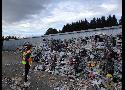
This pains me to write, but we all have to come to terms with the harsh reality that recycling validates waste and is a placebo to the complex waste crisis we have designed ourselves into. The things you are separating and putting in your recycling bins are probably not being recycled — and there’s a good chance that they are ending up somewhere you never imagined.
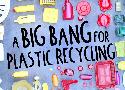
Precious Plastic exists to reduce plastic waste.
Sometimes we do it through boosting recycling. Sometimes through new biodegradable materials. Some other time by adopting zero waste lifestyles.
Whatever works.
Sometimes we do it through boosting recycling. Sometimes through new biodegradable materials. Some other time by adopting zero waste lifestyles.
Whatever works.
Abfall ist keine Substanz, sondern ein Verhältnis. Durch die Geschichte hindurch hatten die Menschen sich in einer überwiegend friedfertigen Beziehung mit ihrem ständigen Begleiter eingerichtet. Seit 100 Jahren jedoch hinterläßt jede Generation der nächsten einen wachsenden Berg von Altlasten. Der Abfall fordert, nachdem er einige Metamorphosen durchlaufen hat, die Fallensteller der Kategorien heraus – Gesetzgeber, Chemie-Ingenieure, Materialwissenschaftler, Marktforscher, Polizisten, Semiotiker, Kunstkritiker. Heute sind wir dabei, die gesamte Infrastruktur der Gesellschaft nach den Erfordernissen des Müll-Systems auszurichten. Was dabei rauskommt, ist allerdings – bestenfalls – eine Verdichtung und Verlagerung. Mit jeder Verdichtung wird der Tödlichkeitsgrad des Mülls erhöht, mit jeder Verlagerung ein weiteres Territorium in Altlast verwandelt. Die Zukunft hat bereits begonnen. Ihre Fragestellung lautet nicht mehr eigentlich: wohin mit dem Müll?, sondern: wohin mit uns? Hat der Müll System oder ist das System der Müll?