6722 shaares
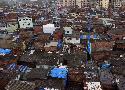
But inside the square-mile slum, made famous in the movie "Slumdog Millionaire," is a bustling micro-economy filled with industry and commerce that generates some $665 million per year, according to Reality Gives, a non-profit that runs tours of Dharavi and uses the money to run community centers and classes for its 1 million residents. The workers and residents of Dharavi export leather goods, suitcases, baked goods, textiles, stoves, and an array of other products into the broader Indian economy.


The 13th Compound is at the heart of Dharavi’s recycling industry. An estimated 80% of Mumbai’s plastic waste is recycled in the slum, in some 15,000 single-room factories.
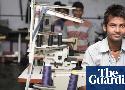
Inside the beehive of Mumbai’s central slum, skilled teams of small-scale manufacturers – from leather workers to garment stitchers – form a shadow world that the government refuses to recognise
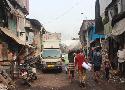
Over the years, Dharavi dwellers have created an industrial economy in Mumbai, creating employment opportunities for the recycling of Mumbai’s waste, an undertaking that arguably should be addressed by local councils.
Every day, people are working to advance society. In their neighborhoods, in their region or around the world. They all aim to achieve the greatest possible social impact.
But what exactly is social impact? How can it be measured? Or even planned?
This website sheds light on these matters – to help you do a better job of doing good. Step by step. Everything here is barrier-free, free of charge, and there is no need to register.
But what exactly is social impact? How can it be measured? Or even planned?
This website sheds light on these matters – to help you do a better job of doing good. Step by step. Everything here is barrier-free, free of charge, and there is no need to register.
This project will advance core understanding of maintenance and repair practices and connect these to long-standing concerns around the design, innovation, and sustainability of new computational tools and infrastructures. Technology maintenance and repair constitute central elements in the long-term impact and sustainability of computing tools and infrastructures. While there is tremendous need for understanding their effects on engineering development, maintenance and repair have been systematically underrepresented in human-computer research to date. By improving the design-repair nexus, this project seeks not only to study sustainability but also enhance it. Pedagogically, it develops new repair-centered teaching and learning strategies for education in engineering and the social sciences.
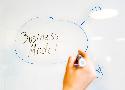
Social Business Model Canvas
RREUSE is an international network representing social enterprises active in re-use, repair and recycling.
The linear ‘take, make, use, and dispose’ economy is driving the climate emergency. Extraction and processing of natural resources make up half of the total global greenhouse gas emissions and over 90% of water stress and biodiversity loss impact, according to the International Resource Panel. Product re-use and repair are the building blocks of circular economy, which can contribute to climate change mitigation by preventing resource depletion, diverting products and materials from landfills and incineration (therefore preventing associated emissions), and reducing energy demand.
Pollution, biodiversity loss, and climate change have all resulted from current lifestyles. Reversing course and getting people to act sustainably requires more than information, technology and new laws, particularly when change is in the hands of individuals. This is why Behaven works with governments and businesses to harness the power of behavioural science to make people actors of sustainability, and encourage the behaviours that benefit society and the planet the most.
One human’s trash is another human’s treasure. eBay Kleinanzeigen can give you more than you can imagine. Nestled among classifieds for furniture, flats, repair services, tantra massages, and baby clothes, you can find four Out of Scale listings. Occupying advert spaces of commerce and exchange, Anna Ehrenstein and Jeanne-Ange Wagne, Elio J Carranza, Nora Al-Badri, and Nazanin Noori offer their perspectives of the networked politics of the city. Find yourself in these distributed networks of revolt, resistance and dissidence.
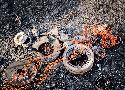

Hydroelectric turbines for green, decentralized energy.

MARR’s mission is to challenge the perception of waste culture by providing a unique platform for artists at the intersection of art, community, and waste systems. The Moab area is highly impacted by the tourism industry and, as a result, waste management. By facilitating artists’ direct engagement with the waste stream, MARR encourages resident artists to consider their studio practice through the lens of sustainability and to thoughtfully re-assess their processes of material sourcing and waste disposal.
Through a 4-week residency, the program offers artists studio space, project and community facilitation, a stipend, access to materials at local waste disposal sites, and the time and space to focus solely on their art. As a component of each residency, artists spend time providing opportunities for learning, dialog and enrichment within the community.
Through a 4-week residency, the program offers artists studio space, project and community facilitation, a stipend, access to materials at local waste disposal sites, and the time and space to focus solely on their art. As a component of each residency, artists spend time providing opportunities for learning, dialog and enrichment within the community.
The Solar Biennale, an initiative of solar designers Marjan van Aubel and Pauline van Dongen, counterbalances the prevailing technological and economic viewpoints on solar energy. For seven weeks, the biennale focuses on the human angle: a solar-powered world goes beyond scientific research and uniform solar panels, after all. Cultural practices and place-specific energy needs also determine how the post-carbon future will develop.
We design and build products from excess fabrics and waste.
Diese Arbeit zeigt anhand von drei exemplarischen Produkten wie reparierbares Produktdesign aussieht. Zehn Richtlinien klären dabei über notwendige Vorraussetzungen auf und motivieren Nutzende, sich selbst an der Reparatur zu versuchen.

Finding Function In Unexpected Places.
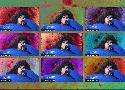
900 trillion tonnes of food is wasted yearly, and so I challenged myself to turn this abundance of “waste” into utility. In this project, the wasted food was reincarnated twice. Firstly, it was given a second life as a bioplastic or a bioleather after a thorough experimentation with recipes. Next, the results were made into a myriad of physical and digital prototypes. Safe to say that one man’s food waste is another man’s treasure.
We are an international collective that develops online educational resources in the field of zero waste design and systems thinking for fashion.
Vote for your favourite project 🏆 the People’s Choice winner will be awarded a Free 1-year subscription plan to Wikifactory and 250€ discount in Marketplace by Wikifactory.
rehub is a lab that aims to give a second chance to waste materials using cutting-edge processes

DIY reigns in the virtual world. With so many old points of friction removed, we can freely and cheaply build our own blogs, e-books, and Web magazines. But making real, live stuff still seems like a slog reserved for those who know their way around a bandsaw.
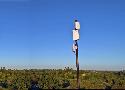
APC’s local access and community networks team hosted a webinar called “We ♥ Bamboo: How to grow and construct your own bamboo masts for extending rural connectivity – sharing experiences”. The aim of the webinar was to offer guidance to those who would like to build bamboo community network towers or further develop their work in this area. The organisers invited practitioners from India, Indonesia and Mexico with field experience in using bamboo for construction to share their knowledge and explore opportunities to use bamboo towers for extending rural internet connectivity and connecting the unconnected.
Deine beste Wahl für defekte Elektrogeräte

Reparado.de – Deine Suchmaschine für Reparaturen
MeinMacher-Techniker reparieren defekte Elektro-Geräte (fast) aller Art und Marke.
Aus Leidenschaft und Überzeugung. Denn reparieren lohnt sich!
Aus Leidenschaft und Überzeugung. Denn reparieren lohnt sich!
Preventing waste generation, especially non-recyclable waste, would deliver the greatest benefits for the environment. The reduction in waste needed to meet the target would require very ambitious waste prevention measures to be implemented at both EU and Member State levels, for instance by increasing the lifespan of consumer goods and ensuring strong support for product reuse.
All in all there is an active ecosystem of mutually re-enforcing and dependent commons and cooperative actors that are building products and services aiming to be more inclusive, that are produced following shared knowledge and participatory processes, with governance models that foster participation by workers and/or users. In many cases the economy and salaries are still fragile, but participants work hard to consolidate their projects, despite the fact that most institutions and support systems are catered for a capitalist mode of production. All in all, there is an alternative vision emerging, one that tells that yes, we can do it together, without excluding others from using, reusing and participating. One that puts the people truly in the centre and builds on shared missions, on people and planet before profit. Key will be to build further institutional support and strengthen interlocal and international collaboration, replication and reuse and co-development of needed infrastructures, services and mutual support.
Our mission is the transition to a collaborative and circular consumption of electronics
Desde el Grupo de Reutilización y Redistribución de Recursos queremos convertir los recursos materiales en desuso (RMD) en oportunidades que proporcionar a las iniciativas de interés público e incentivar a la administración pública a desarrollar buenas prácticas para la gestión eficiente de los recursos. Creemos en la necesidad de construir masa crítica y empoderamiento para la gestión de recursos, en las prácticas cooperativas y colaborativas, en la gestión compartida y en el retorno al común.
It is common to describe our relationships with society, the world, and the biosphere with metaphors from economics, which has specific understandings of value. With regard to the biosphere, today’s prevailing economics conventions are unable to recognize intrinsic value to the ecosystems on which all life depends. In cultures overdetermined by concepts from economics, we are left without adequate discursive instruments to socially or politically address the importance of the work of the biosphere.
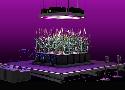
The Life Support System experiment consists of 1 square meter of wheat, cultivated artificially in a closed environment. All inputs such as water, light, heat, and nutrients are measured, monitored and displayed for the public. This one square meter unit of Life Support System is capable of furnishing 1 day’s worth of necessary caloric nutrition for one human adult every 4 months. To feed a single human adult all year would require approximately 100 such units running concurrently. This procedure makes palpable the orders of magnitude, of material and energy flows, that are required to reproduce human nutritional requirements in closed or artificial environments, in contrast to outdoor agriculture on arable land. This indoor farm experiment is a counter-example which points to the vastness of the ecosystem contributions involved in conventional agriculture, that defy conventional economic reductionism.
By attempting to grow, in a closed environment, a staple food like wheat, which has historically provided the greatest proportion of necessary caloric intake for humans in Europe, this experiment provides a sense of scale of ecosystem contributions that are poorly acknowledged under the current economic conventions. The empirical “true-cost estimates” obtained through this indoor experiment are about 200€ per kilogram of wheat, an extravagant cost compared to the 15 cent per kilogram current market price. Though Hydroponics can be used for certain plants, for necessary caloric nutrition there is as yet no economically justifiable replacement for conventional agriculture embedded radically and immanently in the biosphere.
The Life Support System experiment consists of 1 square meter of wheat, cultivated artificially in a closed environment. All inputs such as water, light, heat, and nutrients are measured, monitored and displayed for the public. This one square meter unit of Life Support System is capable of furnishing 1 day’s worth of necessary caloric nutrition for one human adult every 4 months. To feed a single human adult all year would require approximately 100 such units running concurrently. This procedure makes palpable the orders of magnitude, of material and energy flows, that are required to reproduce human nutritional requirements in closed or artificial environments, in contrast to outdoor agriculture on arable land. This indoor farm experiment is a counter-example which points to the vastness of the ecosystem contributions involved in conventional agriculture, that defy conventional economic reductionism.
By attempting to grow, in a closed environment, a staple food like wheat, which has historically provided the greatest proportion of necessary caloric intake for humans in Europe, this experiment provides a sense of scale of ecosystem contributions that are poorly acknowledged under the current economic conventions. The empirical “true-cost estimates” obtained through this indoor experiment are about 200€ per kilogram of wheat, an extravagant cost compared to the 15 cent per kilogram current market price. Though Hydroponics can be used for certain plants, for necessary caloric nutrition there is as yet no economically justifiable replacement for conventional agriculture embedded radically and immanently in the biosphere.
A REALLY usable, all-in-one alternative to Facebook, Gmail, Flickr, Dropbox...

We’re a Berlin-based impact and tech startup that aims to accelerate the transformation towards a circular economy. To achieve this, our team digitizes and simplifies circular services and processes with our software platform and partnership options – for electronics and other products.
“No segundo semestre de 2017, um grupo de cineastas e jornalistas independentes, percorreu com o ex-presidente Lula e sua comitiva 58 municípios do Nordeste, com a missão de fazer um longa-metragem inovador e surpreendente”, informa o texto de apresentação na plataforma de projetos do DCM. “Diferentemente de outros documentários que colocaram suas lentes observando os bastidores das viagens ou das campanhas, O Povo Pode é um filme sobre o Brasil profundo, captado ao longo da Caravana Lula pelo Nordeste. É um filme através de Lula. Um filme captado e inspirado no seu olhar.”, complementa.
In “Marx’s Theory of Metabolic Rift” (1999), I argued that the widespread view on the left that Marx had adopted a Promethean (extreme productivist) view of the human domination of nature—and hence had failed to perceive the natural limits to production and ecological contradictions in general, giving them at most only marginal attention—was contradicted by his theory of the metabolic rift, which played a key role in his overall analysis.
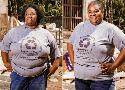
Do TCC ao maior projeto socioambiental de Ubatuba: a trajetória da Coco e Cia
Beyond the so-called ‘Alt-right’ and its attendant milieus on 4chan and Reddit, memes have passed the post-digital threshold and entered new theoretical, practical, and geographical territories beyond the stereotypical young, white, male, western subject. As they metastasized from the digital periphery to the mainstream, memes have seethed with mutant energy. From now on, any historical event will be haunted by its memetic double. Our responses to memes in the new decade demand an analogous virtuality.

The CDP bureau includes three policy units: International Cyberspace Security, International Information and Communications Policy, and Digital Freedom. Ultimately, the bureau will be led by a Senate-confirmed Ambassador-at-Large. Starting today, Jennifer Bachus, a career member of the Senior Foreign Service, is serving as Principal Deputy Assistant Secretary for the CDP bureau. PDAS Bachus will serve as Senior Bureau Official until an Ambassador-at-Large is confirmed. Michele Markoff is serving as Acting Deputy Assistant Secretary for International Cyberspace Security, Stephen Anderson is serving as Acting Deputy Assistant Secretary for International Information and Communications Policy, and Blake Peterson is serving as Acting Digital Freedom Coordinator.

The New European Bauhaus initiative connects the European Green Deal to our daily lives and living spaces. It calls on all Europeans to imagine and build together a sustainable and inclusive future that is beautiful for our eyes, minds, and souls.
The New European Bauhaus is a creative and transdisciplinary movement in the making!
It is a bridge between the world of science and technology, art and culture.
It is about leveraging our green and digital challenges to transform our lives for the better.
It is an invitation to address complex societal problems together through co-creation.
By creating bridges between different backgrounds, cutting across disciplines and building on participation at all levels, the New European Bauhaus inspires a movement to facilitate and steer the transformation of our societies along three inseparable values:
sustainability, from climate goals, to circularity, zero pollution, and biodiversity
aesthetics, quality of experience and style, beyond functionality
inclusion, from valuing diversity, to securing accessibility and affordability
The New European Bauhaus brings citizens, experts, businesses, and institutions together to reimagine sustainable living in Europe and beyond. In addition to creating a platform for experimentation and connection, the initiative supports positive change also by providing access to EU funding for beautiful, sustainable, and inclusive projects.
The New European Bauhaus is a creative and transdisciplinary movement in the making!
It is a bridge between the world of science and technology, art and culture.
It is about leveraging our green and digital challenges to transform our lives for the better.
It is an invitation to address complex societal problems together through co-creation.
By creating bridges between different backgrounds, cutting across disciplines and building on participation at all levels, the New European Bauhaus inspires a movement to facilitate and steer the transformation of our societies along three inseparable values:
sustainability, from climate goals, to circularity, zero pollution, and biodiversity
aesthetics, quality of experience and style, beyond functionality
inclusion, from valuing diversity, to securing accessibility and affordability
The New European Bauhaus brings citizens, experts, businesses, and institutions together to reimagine sustainable living in Europe and beyond. In addition to creating a platform for experimentation and connection, the initiative supports positive change also by providing access to EU funding for beautiful, sustainable, and inclusive projects.
Conversations on the New European Bauhaus
Beautiful | Sustainable | Together
Beautiful | Sustainable | Together

This toolbox contains eight tools that guide you through a circular innovation process and provide you with the resources you need along the way.
This is a resource for companies and organizations who want to work more creatively and collaboratively in their team or organization towards circularity.
The methods are divided into three categories:
Exploring the problem space
(Co)-creating new circular solutions
Making the future concrete
Each tool has step-by-step process guides and is free of charge. Some of the tools are unique to our methodology, and some are borrowed from other organizations.
We’ve put together this toolkit through inputs from partners and engaged individuals. Our goal is to keep developing the toolkit, so the next step is to test the tools and the order of use with businesses and organizations. We’ll keep updating the kit with new knowledge.
This is a resource for companies and organizations who want to work more creatively and collaboratively in their team or organization towards circularity.
The methods are divided into three categories:
Exploring the problem space
(Co)-creating new circular solutions
Making the future concrete
Each tool has step-by-step process guides and is free of charge. Some of the tools are unique to our methodology, and some are borrowed from other organizations.
We’ve put together this toolkit through inputs from partners and engaged individuals. Our goal is to keep developing the toolkit, so the next step is to test the tools and the order of use with businesses and organizations. We’ll keep updating the kit with new knowledge.
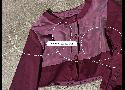
We believe in a future where our clothes are loved again, live as long as possible and preserve a piece of history - where they are 'passed on' from generation to generation, recycled or even upgraded. We facilitate optimised textile cycles that protect our environment, that encourage a new and sustainable understanding of values, and that give us joy - in the often unexpected ways we can reuse our clothes.
Extending the use and life of our clothing is the best way to reduce the environmental impact of textiles. Our goal is to reach as many people as possible and encourage them to help shape our textile future.
Together we can create a cycle by donating our clothes properly, repairing them and making new from old. In this way, used or unused garments gain new value again and again and can continue their journey - A-GAIN & A-GAIN
Extending the use and life of our clothing is the best way to reduce the environmental impact of textiles. Our goal is to reach as many people as possible and encourage them to help shape our textile future.
Together we can create a cycle by donating our clothes properly, repairing them and making new from old. In this way, used or unused garments gain new value again and again and can continue their journey - A-GAIN & A-GAIN

Get rid of things dragging you down